 Rethinking Innovation for Societal Challenges
Innovation has long been associated with growth and competitiveness. But as the Editors emphasise in the Preface, this traditional framing is no longer sufficient. In the face of climate change, environmental degradation, and resource constraints, innovation must be reoriented towards broader societal goals. Sustainable innovation is not a niche concern – it is a necessity.
The book makes clear that this shift is not simply about adding environmental considerations to existing practices. It requires a more fundamental transformation in how innovation is understood, assessed, and governed. Sustainability must become a central organising principle, rather than an afterthought.
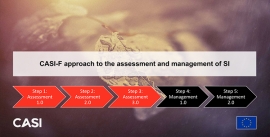
Equally important is the recognition that sustainable innovation is inherently multidimensional. It spans environmental, economic, and social domains, and therefore depends on the active involvement of multiple stakeholders. The CASI project, which underpins the book, demonstrates how large-scale mapping, stakeholder mobilisation, and mutual learning can be translated into practical frameworks such as CASI-F, offering new ways to guide innovation towards sustainability.
Innovation, Risk, and the Need for Direction
In his Foreword, Ian Miles places this discussion in a broader perspective. Innovation, he argues, is both part of the problem and part of the solution. The systems that have driven economic and technological progress have also contributed to environmental and social challenges. The task now is not to slow innovation, but to redirect it.
This is not a straightforward process. As Miles highlights, transitions are rarely linear. Policies, strategies, and technological advances often produce unintended consequences, while promising initiatives do not always scale as expected. This makes governance, monitoring, and collective learning essential.
Rather than assuming that change can be centrally controlled, the book points towards a more adaptive and reflexive approach. Sustainable innovation requires not only new tools, but also new narratives and new forms of coordination across actors and levels.
From Frameworks to Practice
The structure of the book reflects this ambition.
Part I establishes the conceptual and empirical foundations, introducing the CASI Framework and clarifying the role of different types of innovation – particularly the importance of social innovation within broader sustainability transitions.
Part II focuses on participatory governance, showing how stakeholder engagement and citizen involvement shape innovation pathways and strengthen both legitimacy and impact.
Part III turns to management and implementation, drawing on real-world cases, comparative analyses, and tools such as CASIPEDIA to identify barriers, drivers, and practical strategies for advancing sustainable innovation.
Across all three parts, a consistent message emerges: sustainable innovation cannot be managed through isolated interventions. It depends on aligning knowledge, policy, and practice in a coordinated and iterative way.
Sustainable innovation is not just about new ideas – it is about governing change.
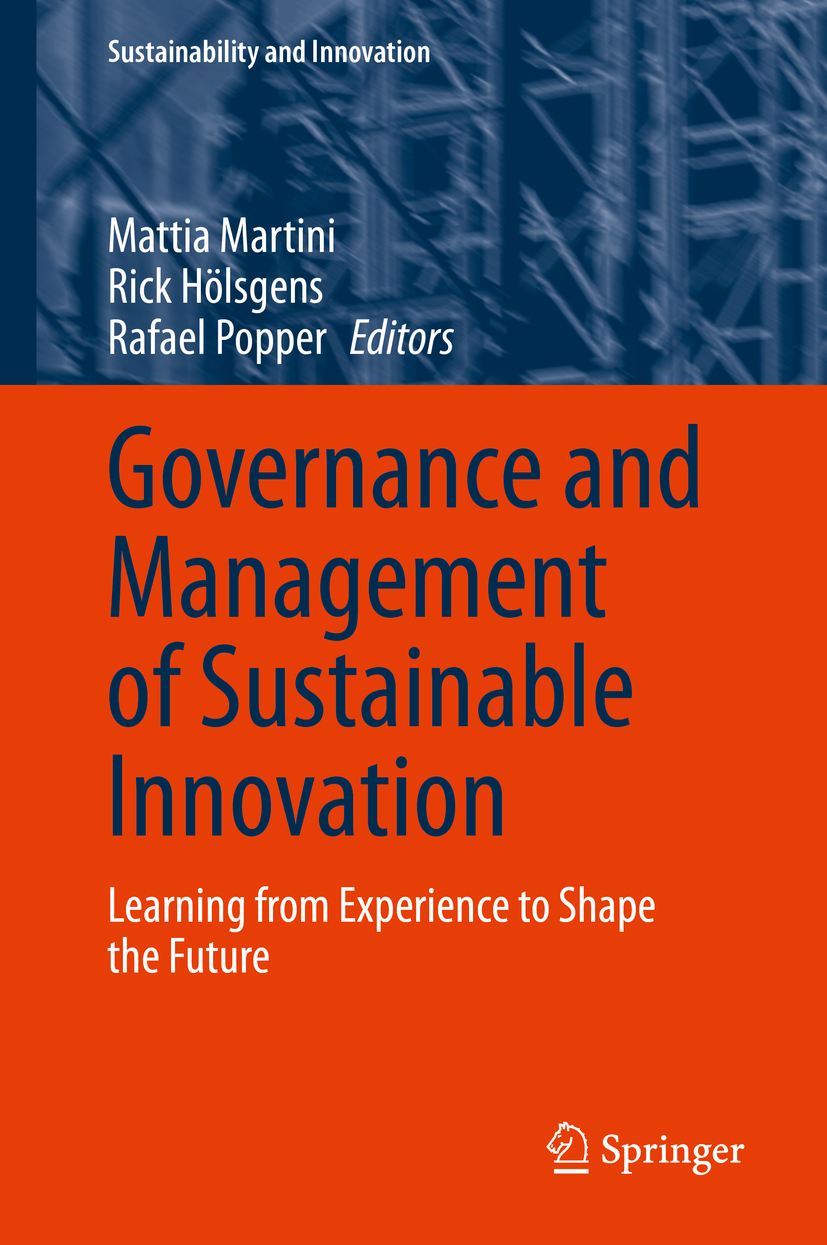
To explore the full book, including the CASI Framework and its applications, visit the Springer page:
https://doi.org/10.1007/978-3-030-46750-0